RAID Data Recovery by the Authority in Data Recovery
Failed RAID array data recovery services
A RAID (Redundant Array of Independent Drives) has many different levels and can be fault tolerant or not. For example, a RAID 5 array, which is very common, is fault tolerant because of the parity information that is striped across the members. If one drive fails, the parity is calculated and the data is retrieved. If two drives fail, the RAID collapses.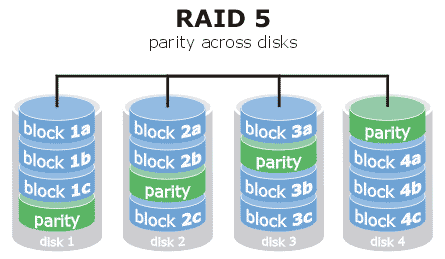
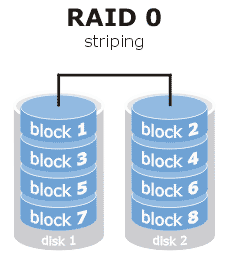
RAID level 0 is also a striped schema but is not fault tolerant because it does not use parity information. RAID 0 is implemented for performance only. There are many levels of RAID and all descriptions are beyond the scope of this document. Initially, we must acquire images from each of the members of the array. This separates out physical issues and gives us working copies. Depending upon the level of RAID, we must read every sector of every drive in order to insure a quality recovery. Sometimes this requires rebuilding drives in order to acquire the needed raw data. Once we have all the raw data possible, we analyze the patterning of the data and merge it back together, and if all is well, we will produce the logical structure that you were used to seeing and copy the data to a stable media.